

34%, the average lookalike CPM increase across our DSP-running client base from January 1 to March 31, 2026.
11, the number of brands in that book who reduced DSP budget by more than 20% in the same window.
3, the number of audience-targeting changes Amazon shipped between December 2025 and February 2026 that drove both numbers.
This is the Q1 2026 DSP report, written from the inside of 41 active DSP accounts running between $8k and $310k per month. It covers what changed, who pulled budget and why, and where the remaining budget is going.
The three audience changes Amazon shipped
December 11, 2025, Amazon deprecated the granular in-market segments for 14 retail categories, consolidating them into broader “lifestyle” buckets. The most affected: pet, home improvement, baby, beauty, and grocery. Brands that had built media plans around 80-200 narrow segments suddenly had access to 12-20 broader ones. Targeting precision dropped. Reach inflated. CPMs followed.
January 22, 2026, Lookalike modeling shifted from a 90-day rolling seed window to a 30-day rolling seed window. This was framed as a privacy and freshness improvement. In practice, brands with seasonal or low-frequency purchase cycles lost half their seed audience overnight. Lookalikes built on smaller seeds are noisier. Noisier audiences cost more to convert.
February 18, 2026, Amazon Audiences for DSP began enforcing a new minimum audience size of 50,000 unique shoppers per segment, up from the previous 10,000. Brands targeting niche purchase intents could no longer use them. The workaround, broaden the segment until you hit 50k, defeats the precision that made the segment useful.
None of these changes were announced as price increases. All three functioned as price increases.
What the CPM data showed
Across the 41-account book, we tracked weekly CPMs by line-item type from October 2025 through March 2026.
Branded retargeting CPMs were stable. $1.10 in October, $1.18 in March. A 7% drift, mostly seasonal.
In-market audience CPMs jumped from $4.20 to $5.85, a 39% increase, concentrated in the 6 weeks following the December consolidation.
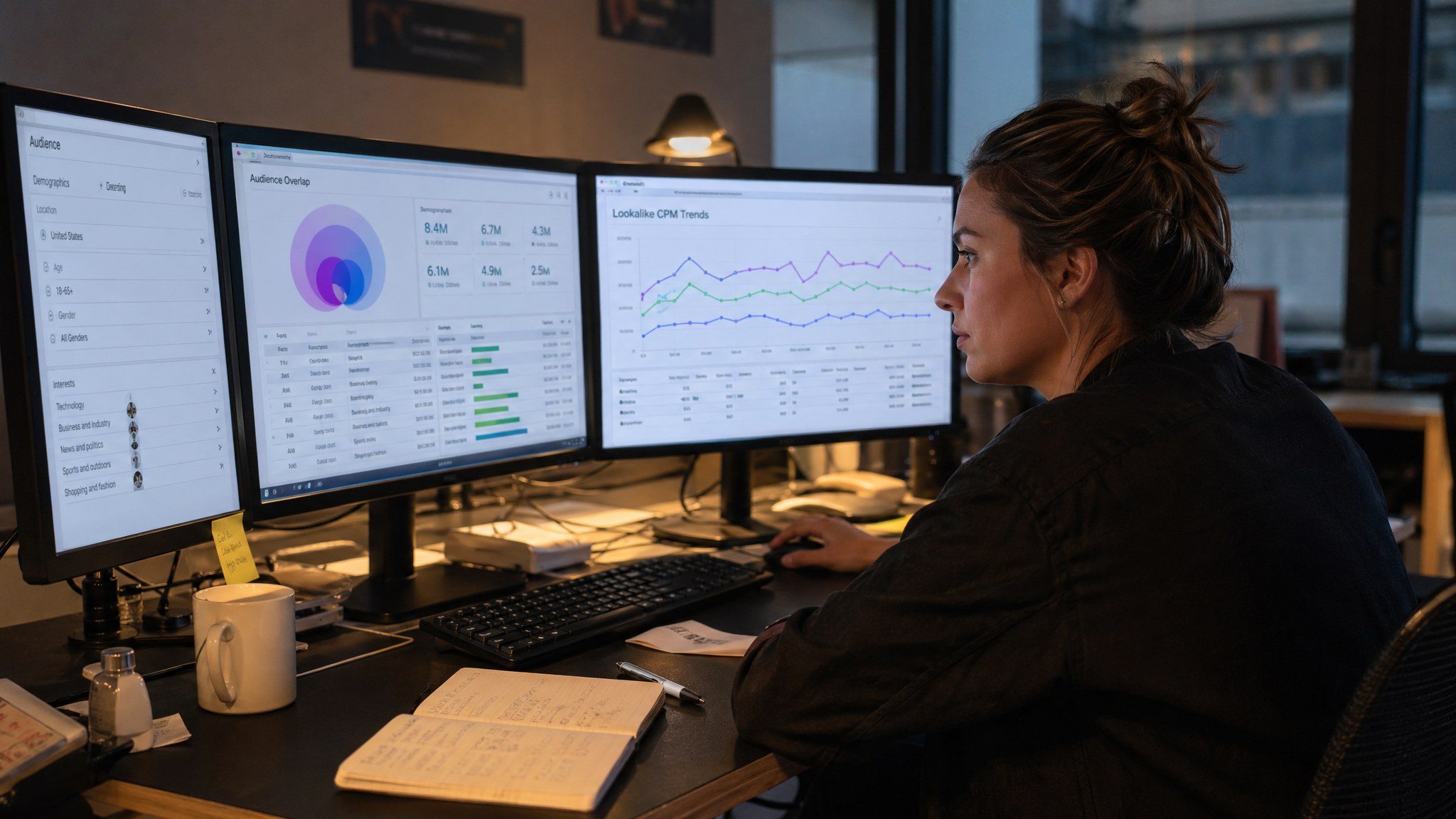
Lookalike CPMs went from $5.10 to $6.85, a 34% increase, with the steepest move in the four weeks after the January seed-window change.
Behavioral and lifestyle CPMs, the new “consolidated” buckets, held flat at around $4.50, but conversion rates on the same line items dropped 18% on average. Net effect: cost per acquisition on these lines rose 22%.
Streaming TV (OTT) CPMs were the only line item that fell, from $32 to $28. Inventory expansion on Fire TV and the Prime Video ad tier added supply faster than demand. STV is the budget winner of Q1 2026 by default.
Who pulled budget and why
Eleven brands in the book reduced DSP budget by 20% or more in Q1. The cuts clustered into three profiles.
Profile 1, Lookalike-heavy programs at smaller spend tiers. Five brands spending $8k-25k/month on DSP, with 60%+ of that spend on lookalikes, cut budget by 30-50%. The new 30-day seed window made their lookalike audiences too small and too expensive to justify. They redirected spend to Sponsored Display product targeting, which still has the granular ASIN-level audiences DSP lost.
Profile 2, In-market dependent programs in deprecated categories. Four brands in pet, home improvement, and beauty cut DSP budget by 20-35%. They had built their entire prospecting layer on the narrow in-market segments that disappeared in December. The broader replacement segments did not deliver the same CAC. Some of that budget moved to Sponsored Brands video. Some moved to Meta.
Profile 3, Niche-audience builders. Two brands serving specific dietary or hobby niches lost their primary targeting segments to the 50k minimum and pulled out of DSP entirely for now, pending Amazon Marketing Cloud custom audience build-outs.
The remaining 30 brands held or grew DSP budget. The pattern among them: heavy retargeting reliance, mature OTT presence, or the budget scale to invest in Amazon Marketing Cloud (AMC) custom audiences as a workaround.
Lookalike economics in 2026, the math has changed
For most of 2024 and early 2025, a well-built DSP lookalike would deliver 2-3x reported ROAS at scale. The math was simple. $5 CPM, 0.4% CTR, 6% conversion rate on a $40 AOV ASIN got you to a workable number.
That math broke in January. Same $40 AOV, same 0.4% CTR, but CPM at $6.85 and conversion rate down to 4.8% (because the smaller seed produced a less-similar lookalike) cuts reported ROAS from 2.4x to 1.5x. Run the holdout test on top and incremental ROAS lands at 0.7-1.1x. You are paying for visibility, not for sales.
The tactical fix is to stop building lookalikes off the default 30-day seed and instead build them via AMC off custom seeds, multi-quarter purchasers, high-LTV cohorts, or branded-search clickers. AMC lookalikes ignore the new 30-day default and let you reconstruct the seed window manually. The brands holding budget through Q1 2026 are almost universally the ones who got AMC operational.
Where the surviving budget is going
Of the 30 brands that held or grew DSP budget, the spend mix shifted in three directions.
OTT and Fire TV up 22% on average. Cheaper inventory, more available impressions, and Prime Video ad-tier supply growing every month. Brands that had treated OTT as a 10% line item in 2025 are running 18-25% in 2026.
Retargeting up 14% on average. Branded retargeting CPMs stayed flat while prospecting got expensive, so the relative efficiency of retargeting improved. Brands shifted spend from prospecting toward retargeting and accepted a smaller top-of-funnel.
AMC custom audiences up 60%+ from a small base. Most brands are still in build-out, but the ones with mature AMC programs are running 25-40% of DSP spend through custom-built segments and seeing the cleanest CACs in the book.
Standard prospecting via Amazon Audiences and out-of-the-box lookalikes is the loser. Down 18% on average across the book. The default targeting got more expensive and less precise simultaneously. There is no scenario in 2026 where standard prospecting recovers without Amazon reversing the changes.
The question to ask before Q2 budgeting
If you are budgeting DSP for the rest of 2026, the question is no longer “should we run DSP?” It is “do we have AMC operational?”
Brands without AMC are running with one hand tied. The standard targeting got worse. The workaround lives in AMC. Without it, you are paying 30%+ more for noisier audiences and hoping it averages out. It will not.
For brands considering whether DSP belongs in the mix at all, our framing piece on Amazon DSP for the brand that’s outgrown Sponsored Brands covers the threshold conditions. The 2026 update to that piece: the threshold for DSP being worth running has moved up. If you cannot fund AMC alongside DSP media, you may be better off doubling down on Sponsored Display and waiting another two quarters.
The brands that will own DSP from here are the ones who treat AMC as the precondition, not the upgrade. Everyone else is paying retail.
Want a Q2 DSP plan built off your AMC readiness and current spend mix? Book a 45-minute working session with our DSP lead.
Related Reading
- DSP Creative Testing in 2026, The 5-Creative Rotation That Beats Algorithmic Optimization
- DSP Frequency Capping, What 40 Mid-Market Accounts’ Data Shows
- DSP Retargeting, Incremental Lift vs Reported ROAS Across 80 Audits
- Amazon DSP for the Brand That’s Outgrown Sponsored Brands
- See our paid media management and Amazon services.